How to Become the Best Version of Yourself



Almost everyone wants to live a better life. We want to feel more confident, productive, healthy, and fulfilled. But many people feel stuck. They know they want to improve, yet they are not sure where to start.
The truth is that becoming the best version of yourself doesn’t happen overnight. It’s not a quick transformation or a perfect end state. Instead, it’s a gradual process of learning, improving, and making better choices every day.
Let’s be honest—most of us have moments where we feel motivated to change our lives. Maybe it happens at the start of a new year, after reading a powerful book, or when we see someone else achieving something we want. But motivation alone doesn’t last forever.
Real growth happens when you build habits, develop self-awareness, and stay consistent even when motivation fades.
In this guide, you’ll learn practical and realistic ways to improve your life, strengthen your mindset, and move closer to becoming the best version of yourself.
Understanding What the Best Version of Yourself Really Means
Before trying to improve your life, it’s important to understand what “the best version of yourself” actually means.
Many people think it means being perfect. But perfection isn’t realistic—and chasing it usually leads to frustration.
Instead, the best version of yourself is someone who:
- Understands their values
- Works toward meaningful goals
- Keeps learning and improving
- Takes care of their physical and mental health
- Builds positive relationships
- Lives with purpose and intention
Your best version will look different from someone else’s.
For example, one person might focus on building a successful business. Another might focus on improving their health or becoming a better parent. Both are valid paths of personal growth.
The important thing is not competing with others. The real goal is to become better than the person you were yesterday.
Why Personal Growth Matters
Some people go through life reacting to circumstances instead of actively shaping their future. They wake up, follow routines, and repeat the same patterns for years.
But when you start focusing on personal growth, your perspective changes. You begin to see opportunities for improvement everywhere. Here are some powerful benefits of self-improvement.
Greater Confidence
Confidence doesn’t magically appear. It develops when you consistently keep promises to yourself. For example, if you commit to exercising three times a week and actually do it, you build trust in your own discipline.
Over time, those small victories build real confidence.
Better Decision Making
When you understand your values and goals, decision-making becomes easier. Instead of reacting emotionally, you start making choices that align with your long-term vision.
Stronger Relationships
Personal growth also improves how you interact with others. When you develop patience, empathy, and communication skills, your relationships naturally become stronger.
Increased Productivity
Good habits and better time management allow you to achieve more with less stress. You become more focused, organized, and efficient.
A Greater Sense of Fulfillment
Perhaps the most rewarding part of personal growth is the feeling that your life has direction and meaning. Instead of drifting through life, you start creating it intentionally.
Step 1: Develop Self-Awareness
Self-awareness is the foundation of personal development. If you want to improve your life, you first need to understand yourself.
This includes recognizing:
- Your strengths
- Your weaknesses
- Your habits
- Your emotional triggers
- Your beliefs about yourself
Many people skip this step and jump straight into trying to change their lives. But without self-awareness, it’s difficult to know what truly needs improvement.
Practice Daily Reflection
A simple habit that can dramatically increase self-awareness is daily reflection.
At the end of the day, ask yourself a few questions:
- What went well today?
- What could I have handled better?
- What did I learn?
This simple practice helps you identify patterns in your behavior and gradually make better decisions.
Journaling
Writing down your thoughts is another powerful way to understand yourself. Journaling helps organize your thoughts and emotions. Over time, you may start noticing repeating patterns in your mindset or habits.
Many successful people keep journals because they help clarify ideas and track personal progress.
Ask for Honest Feedback
Sometimes other people can see our blind spots more clearly than we can. Ask trusted friends, mentors, or colleagues for honest feedback about your strengths and areas for improvement.
While feedback can sometimes be uncomfortable, it can also be incredibly valuable.
Step 2: Set Clear and Meaningful Goals
Imagine starting a journey without knowing your destination. You might move forward, but you’ll likely wander in random directions.
That’s what life feels like without goals.
Goals provide direction, focus, and motivation.
They help you decide where to invest your time and energy.
Use the SMART Goal Method
One effective way to set goals is the SMART framework.
Goals should be:
- Specific
- Measurable
- Achievable
- Relevant
- Time-bound
For example, instead of saying:
I want to get healthier.
Try something more specific like:
I will exercise for 30 minutes four times a week for the next three months.
Clear goals create clear actions.
Step 3: Build Positive Daily Habits
Your habits shape your life more than occasional bursts of motivation.
Think about it—what you do repeatedly every day eventually becomes your lifestyle.
If you consistently practice positive habits, your life gradually improves.
Examples of Powerful Habits
Some habits that support personal growth include:
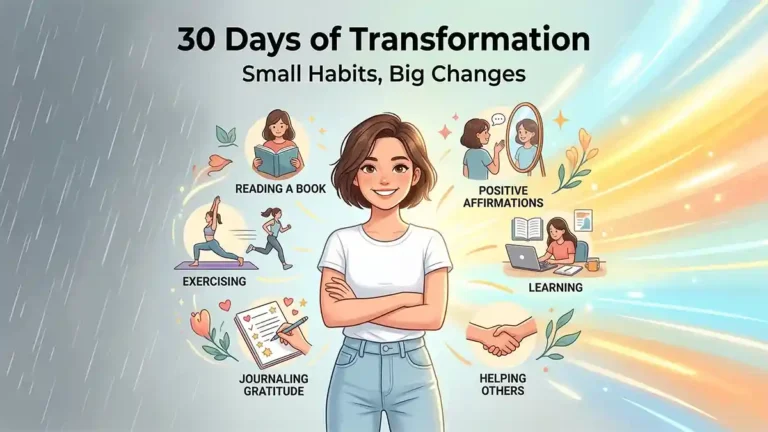
- Reading regularly
- Exercising consistently
- Practicing gratitude
- Planning your day
- Learning new skills
- Limiting distractions
The key is to start small.
If you try to change everything at once, you’ll likely feel overwhelmed.
Instead, focus on one or two habits at a time and build momentum slowly.
Step 4: Develop a Growth Mindset
Your mindset influences how you respond to challenges, setbacks, and opportunities.
People with a growth mindset believe they can improve their abilities through effort and learning.
People with a fixed mindset believe their abilities are permanent and cannot change.
The difference between these mindsets can dramatically affect your success.
Embrace Challenges
Challenges are not obstacles—they are opportunities to grow.
Every new skill requires practice, mistakes, and persistence.
Learn From Failure
Have you ever avoided trying something new because you were afraid of failing?
That fear holds many people back.
But failure is not the opposite of success. It’s part of the learning process.
Every mistake contains valuable lessons if you’re willing to learn from it.
Step 5: Take Care of Your Physical Health
Your physical health has a huge impact on your productivity, focus, and mood.
It’s difficult to perform at your best if you are constantly tired or stressed.
Improving your health doesn’t require extreme changes. Small consistent habits can make a big difference.
Exercise Regularly
Regular movement improves both physical and mental well-being.
You don’t need an intense workout routine to benefit.
Even a daily walk can boost your energy levels and improve your mood.
Eat Balanced Meals
Your brain needs proper nutrition to function well.
Try focusing on whole foods such as:
- Fruits and vegetables
- Whole grains
- Lean proteins
- Healthy fats
Get Enough Sleep
Sleep is often underestimated, yet it is essential for focus, memory, and emotional balance.
Most adults need around seven to eight hours of sleep each night.
Step 6: Strengthen Your Mental Health
Mental health plays a major role in personal development.
When your mind is constantly stressed or overwhelmed, it becomes difficult to focus on growth.
Practice Meditation
Meditation can help calm your mind and improve concentration.
Even five to ten minutes of quiet breathing can reduce stress.
Practice Gratitude
Gratitude shifts your focus from what you lack to what you already have.
A simple habit is writing down three things you are grateful for every day.
Over time, this practice can significantly improve your outlook on life.
Limit Negative Influences
The information you consume affects your mindset.
Try reducing exposure to negative content, toxic conversations, and unnecessary stress.
Protecting your mental space is an important part of personal growth.
Step 7: Commit to Lifelong Learning
One of the most powerful ways to improve yourself is by continuously learning.
The world changes quickly, and those who keep learning stay adaptable and prepared.
Read More Books
Books allow you to learn from experts, thinkers, and successful individuals.
Even reading for fifteen minutes each day can expand your knowledge over time.
Learn New Skills
Developing new skills keeps your mind active and opens new opportunities.
You might learn:
- Communication skills
- Leadership
- Technology skills
- Creative abilities
Learning keeps life interesting and meaningful.
Step 8: Manage Your Time Wisely
Time is the one resource we cannot replace.
Everyone has the same twenty-four hours each day, yet some people accomplish far more than others.
The difference is often how they manage their time.
Plan Your Day
A simple daily plan can dramatically increase productivity.
Each morning, identify the three most important tasks you need to complete.
Avoid Constant Distractions
Phones, social media, and notifications can easily interrupt your focus.
Try creating blocks of time where you work without distractions.
Even one or two focused hours can produce significant results.
Step 9: Surround Yourself With Positive People
The people around you influence your thoughts, habits, and attitudes more than you might realize.
If you spend time with motivated and supportive individuals, their mindset can inspire you.
On the other hand, constant negativity can drain your motivation.
Choose relationships that encourage growth, learning, and positivity.
Step 10: Take Consistent Action
Reading about personal growth is helpful, but knowledge alone does not change your life.
Action is what creates real transformation.
Many people consume motivational content but never apply what they learn.
The difference between dreaming and achieving often comes down to consistent action.
Start small. Take one step at a time.
Small actions repeated every day can lead to remarkable results over time.
Common Obstacles to Self-Improvement
Even when you are committed to personal growth, you may face challenges along the way.
Understanding these obstacles can help you overcome them.
Fear of Failure
Fear often stops people before they even begin.
Remember that mistakes are part of the learning process.
Lack of Discipline
Motivation comes and goes.
Discipline helps you continue even when motivation disappears.
Negative Self-Talk
Your inner voice has a powerful influence on your confidence.
Try replacing harsh self-criticism with constructive thoughts.
A Simple Daily Routine for Personal Growth
Creating a simple routine can help you stay consistent with self-improvement.
Morning
- Wake up early
- Stretch or exercise
- Reflect or practice gratitude
- Plan your day
Afternoon
- Focus on important tasks
- Take short breaks
- Continue learning
Evening
- Reflect on the day
- Read or relax
- Prepare for tomorrow
- Get enough sleep
A structured routine helps create stability and momentum.
Read Also: How to Stop Comparing Yourself to Others and Focus on Your Journey
Final Thoughts
Becoming the best version of yourself is not about becoming perfect. It’s about becoming more aware, more disciplined, and more intentional with your life. Some days will feel productive and inspiring. Other days might feel slow or frustrating. That’s normal. What matters most is continuing the journey. Even small improvements—when repeated consistently—can transform your life over time. So start today. Choose one small habit, one meaningful goal, or one positive change. Then keep moving forward. Your future self will be grateful you did.
FAQs
What does becoming the best version of yourself mean?
It means continuously improving your habits, mindset, health, and skills so you can live a more fulfilling and purposeful life.
How can I start improving myself today?
Start with small steps such as setting clear goals, developing positive habits, and practicing daily reflection.
How long does personal growth take?
Personal growth is a lifelong process. However, small improvements can start showing results within weeks if you stay consistent.
What habits help with self-improvement?
Some helpful habits include reading regularly, exercising, journaling, planning your day, and practicing gratitude.
Can anyone become the best version of themselves?
Yes. Anyone who is willing to learn, adapt, and take consistent action can improve their life and move closer to their best potential.