How to Stop Comparing Yourself to Others and Focus on Your Journey
We live in a hyper-connected world where people’s achievements are just a swipe away. You open Instagram and see a friend vacationing in Europe. You check LinkedIn and spot a colleague celebrating a big career win. On YouTube, a 19-year-old is already a millionaire, and suddenly, your own life feels… small.
This is the dangerous trap of comparison. You measure your progress against someone else’s highlight reel, forgetting that what you’re seeing is only a polished version of reality.
Comparison is like a slow poison — it drains your energy, eats away at your confidence, and distracts you from your own journey. But the truth is, you have your own unique path, your own timeline, and your own definition of success.
In this article, we’ll dive deep into why we compare ourselves to others, how it damages our mental well-being, and, most importantly, how to break free from this cycle and focus on your own life.
1. Why We Compare Ourselves to Others – The Psychology Behind It
Comparison is human nature. In fact, psychologists call it social comparison theory. This theory, introduced by Leon Festinger in 1954, explains that we naturally evaluate our own worth by comparing ourselves to others.
There are two types of social comparison:
- Upward comparison – when you compare yourself to someone “better” than you.
- Downward comparison – when you compare yourself to someone “worse” off than you.
Upward comparison can inspire growth if it motivates you to improve, but it can also lead to feelings of inadequacy. Downward comparison might make you feel better temporarily, but it can create complacency or even arrogance.
The real problem? Social media has amplified upward comparisons to an unhealthy level. You’re not just comparing yourself to your neighbour or co-worker — you’re comparing yourself to millions of strangers across the globe.
2. The Social Media Illusion
Social media is like a highlight reel of everyone’s best moments:
- Perfectly curated vacation photos
- Career achievements
- Fit bodies after years of gym dedication
- Happy relationship posts
What you don’t see are the struggles, failures, and messy moments behind the scenes. The person who bought a luxury car might be drowning in debt. The influencer with a flawless body might be battling insecurity every day.
The more you scroll, the more you forget that these snapshots are not the full story. The brain starts believing you’re behind, unsuccessful, or not good enough — when in reality, you’re just looking at an edited version of someone’s life.
3. Signs You’re Stuck in the Comparison Trap
You might not even realize you’re comparing yourself constantly. Here are some signs:
- You feel a sudden drop in mood after using social media.
- You focus more on what others have achieved than your own wins.
- You often think “I’m not good enough” or “I’m falling behind.”
- You measure your worth by likes, followers, or external validation.
- You avoid celebrating your success because it doesn’t feel “big enough.”
If any of these sound familiar, you’re in the comparison trap — but don’t worry, you can break free.
4. Why Focusing on Your Journey Matters
Your life is not a race, and there is no single finish line. Every person’s circumstances, opportunities, and challenges are different. Comparing timelines is like comparing apples and oranges — meaningless.
When you shift your attention to your own journey, several things happen:
- Less anxiety – You stop stressing over things you can’t control.
- Better decisions – You choose goals that align with your values, not society’s.
- Deeper satisfaction – You feel proud of your growth, no matter the pace.
- Sustainable motivation – You push yourself without burning out.
Also Read
5. Practical Steps to Stop Comparing Yourself to Others
Let’s move from theory to action. Here’s how you can stop comparison and build a healthier mindset.
Step 1: Become Aware of Your Triggers
Notice when you start comparing. Is it after scrolling Instagram? Is it when a colleague gets promoted? Awareness is the first step toward change.
Step 2: Practice Gratitude Daily
Write down three things you’re grateful for every morning. Gratitude shifts your focus from what’s missing to what’s already there.
Step 3: Limit Your Social Media Exposure
Set a timer for how long you use social apps. Unfollow or mute accounts that make you feel inadequate. Curate your feed to inspire, not intimidate.
Step 4: Set Personal Goals
Instead of saying “I want to be like them,” say “I want to be a better version of myself.” Your goals should be based on your interests, values, and circumstances.
Step 5: Celebrate Small Wins
Finished a project on time? Great. Cooked a new recipe? Amazing. These small victories add up and remind you of your progress.
Step 6: Build a Self-Reflection Habit
Journaling helps you track your growth and keep perspective. Reflect on how far you’ve come in the past year — not how far someone else has gone.
6. Building Self-Worth Independent of Others
When your self-worth depends on others’ approval, you’ll always feel insecure. Build your confidence through:
- Learning new skills
- Taking care of your health
- Surrounding yourself with supportive people
- Practicing positive self-talk
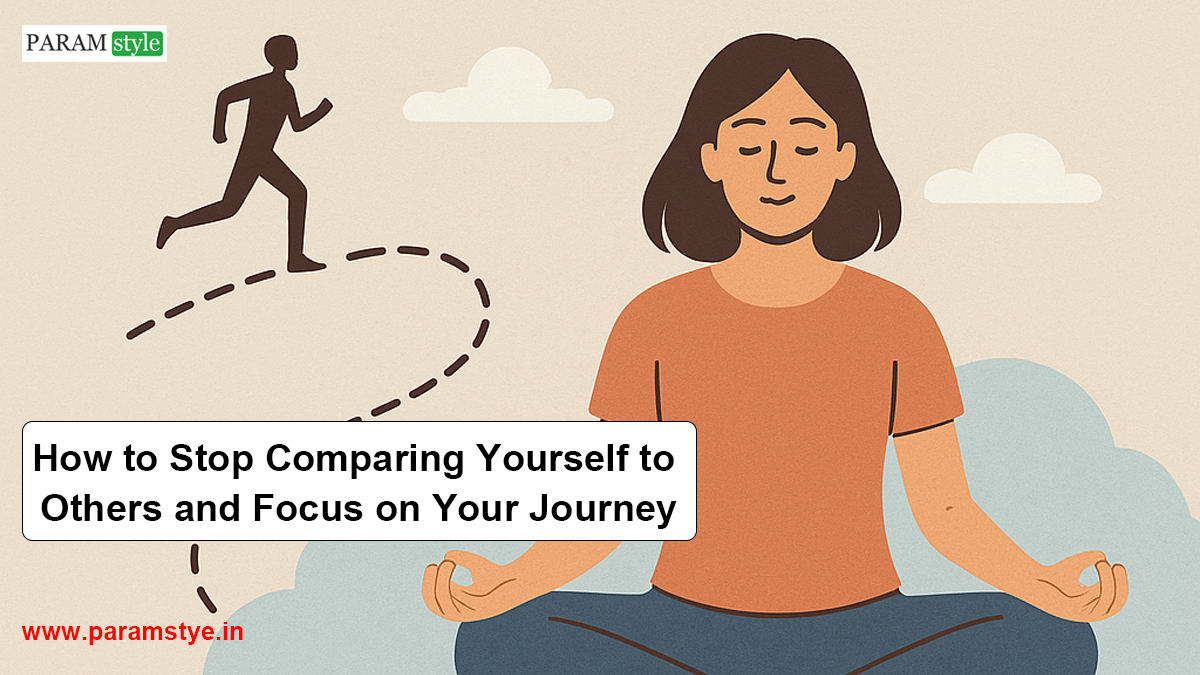
7. Real-Life Example – The Runner’s Race
Imagine two people running a marathon. One is ahead, one is behind. Does that mean the one behind is a failure? No — maybe they started later, maybe they’re injured, maybe they’re running at a pace that works for them.
Life works the same way. You have your own starting line, your own speed, and your own destination.
8. Measuring Your Own Progress
Instead of asking, “Am I doing better than them?” ask, “Am I doing better than yesterday?”
Create a personal growth chart — measure progress in skills, confidence, relationships, and health.
9. Final Thoughts – Your Journey, Your Rules
Comparison steals joy. The only life you should be measuring is your own. Focus on becoming the best version of yourself, at your own pace, and on your own terms.
Remember: The grass isn’t greener on the other side. It’s greener where you water it.